
Window and Door Weather Stripping Compatibility Guide
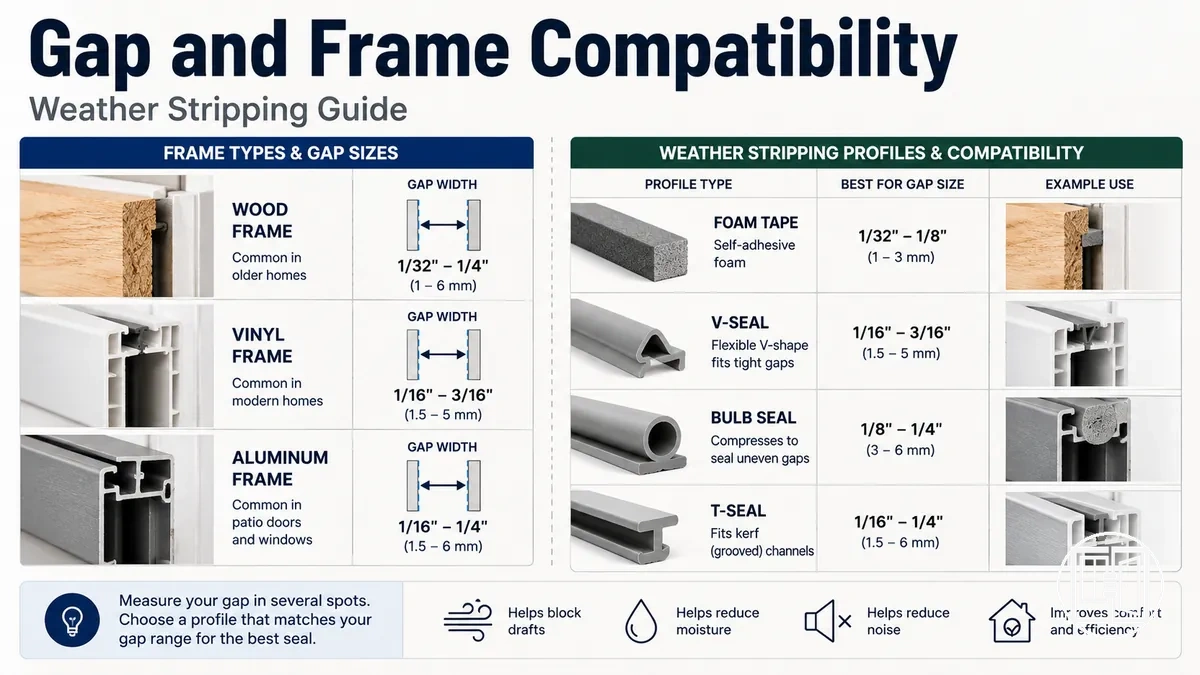
Window and door weather stripping compatibility depends on how a seal strip matches a specific frame condition so it can maintain effective sealing during use. It is determined by how gap size, frame type, seal profile, compression range, mounting surface, contact point, and fit tolerance interact across the frame structure. When these variables align, the weather stripping can maintain stable contact and controlled compression across movement cycles.
The same seal strip can perform differently across two frames that appear similar at first glance. A profile that fits tightly on a rigid frame type may fail to maintain proper compression range on a flexible or uneven mounting surface. In some cases, the contact point may shift away from the intended sealing line, causing gaps even when the seal profile looks visually compatible. These outcomes are conditional and often depend on small variations in gap size and frame condition.
This page evaluates weather stripping compatibility as a structured decision process rather than a fixed product assumption. It breaks down how fit tolerance is determined through physical factors such as compression behavior, sealing surface alignment, and frame geometry. The focus is on understanding when a seal can function reliably and when adjustments in selection criteria are required before installation decisions are made.
Compatibility should also be distinguished from broader material comparison and air leak diagnosis, as those areas involve different evaluation layers. While material choice can influence performance, compatibility specifically focuses on whether the seal can physically match the frame’s mounting surface and maintain effective contact under movement.
What makes weather stripping compatible with a door or window frame
Weather stripping compatibility with a door frame or window frame depends on whether the seal profile can maintain stable contact with the frame surface under compression and movement. It is a fit relationship shaped by how gap size, compression range, attachment method, and contact line alignment work together in real conditions. When these elements align, the outcome is a compatible frame fit rather than a marginal or unsuitable one.
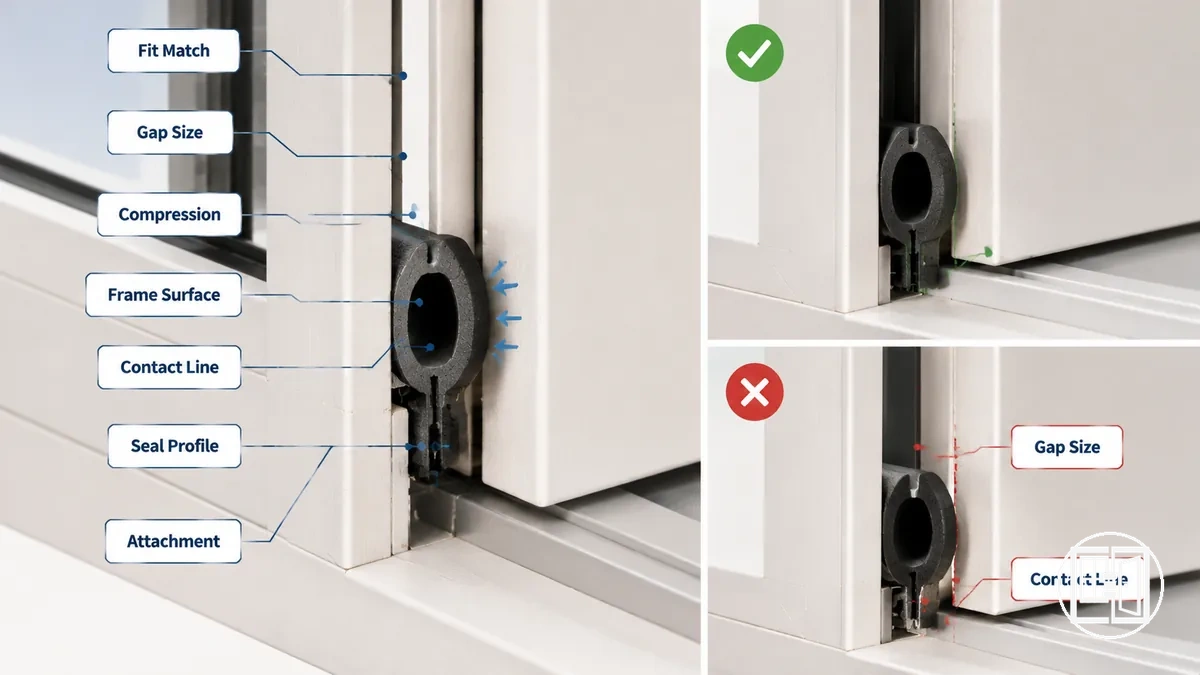
Compatibility is determined by how the seal strip compresses against the frame surface and maintains a continuous contact line during door or window operation. The attachment method must hold the seal profile in position while allowing controlled compression without breaking the sealing surface connection. When compression, contact, and attachment behave in balance, the result can be a compatible fit, while imbalance often leads to marginal or unsuitable outcomes.
A seal strip may also look similar to the original weather seal but still fail in actual performance if the contact line does not align correctly with the frame surface or if compression is outside the required range. This creates a distinction between visual similarity and functional compatibility in real frame conditions.
Compatibility can be evaluated through a small set of physical conditions that determine how the weather stripping interacts with the frame structure:
- Gap size: determines whether the seal profile can reach and compress effectively
- Compression range: controls how the seal responds under closing force
- Contact point: defines alignment with the frame surface or sealing line
- Attachment method: affects stability during repeated movement
- Frame condition: influences consistency of seating surface and fit tolerance
Gap size and compression range for a proper seal fit
Gap size and compression range for a proper seal fit must be evaluated together because the sealing outcome depends on how the measured gap translates into usable compression. The relationship determines whether weather stripping can fill the closing clearance without overfilling or underfilling the frame opening. This creates a direct measurement-to-decision link for selecting appropriate seal thickness and compression behavior.
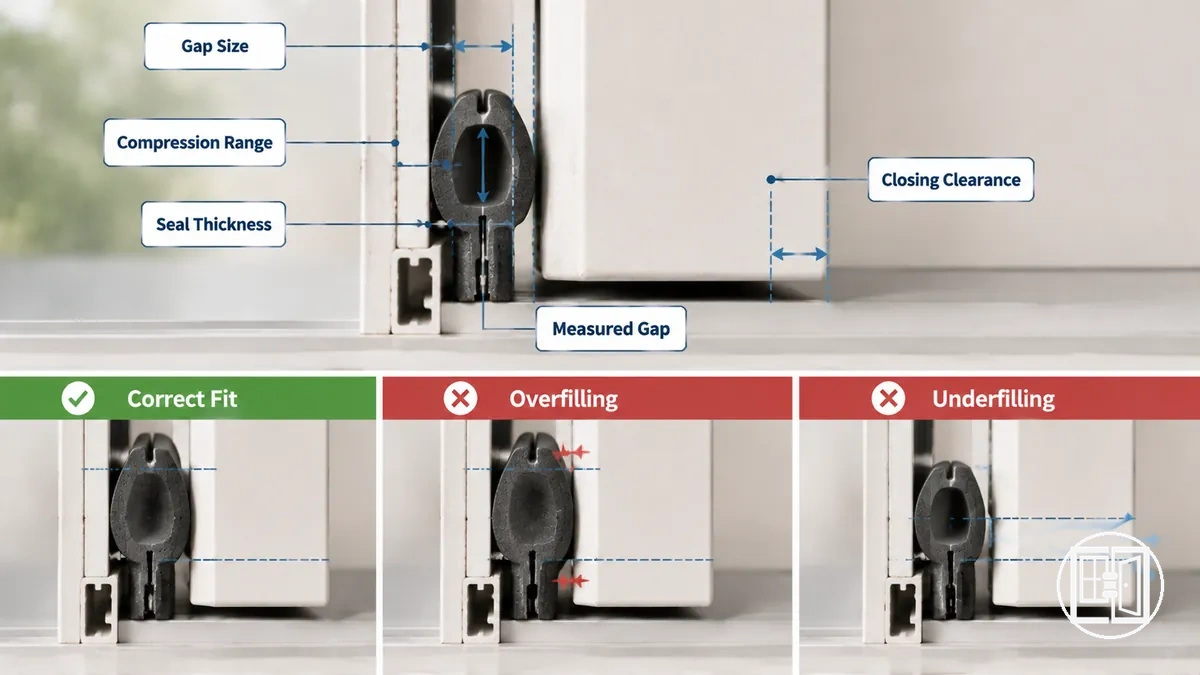
Gap conditions across a door frame or window frame can vary between hinge side, latch side, sill, or sash edges, and this variation directly affects compression range behavior. An uneven gap may require different compression allowance along the same frame, while a consistent gap allows more stable sealing performance. Previously compressed or worn seals can also distort measured gap readings, which changes sizing decisions based on actual frame movement.
Mismatched gap size and compression range can lead to overfilling or underfilling, where the seal either binds against the frame or fails to maintain continuous contact. Both conditions reduce sealing effectiveness and indicate that seal thickness or compression capacity does not align with the frame opening. The table below organizes how different measured gap conditions translate into fit risk and decision cues.
| Measured gap condition | Compression need | Fit risk | Decision cue |
|---|---|---|---|
| Narrow | Low compression allowance | Underfilling risk | Use thinner flexible seal profile |
| Moderate | Balanced compression range | Low fit risk | Standard adaptable seal may suit |
| Wide | High compression requirement | Overfilling risk | Use higher expansion capacity profile |
| Uneven | Variable compression range | Inconsistent sealing contact | Adjustable or adaptive seal needed |
| Compressed-old-seal | Restored compression allowance | Misleading gap measurement | Re-measure after removing old strip |
Narrow gaps and low-profile weather stripping
Narrow gaps and low-profile weather stripping usually require a low-profile seal because limited clearance must close without excessive closing pressure that leads to binding. A thin strip is used to maintain controlled surface contact while allowing smooth door or window movement, with binding risk increasing when the profile is too tall for the narrow gap. :contentReference[oaicite:0]{index=0}
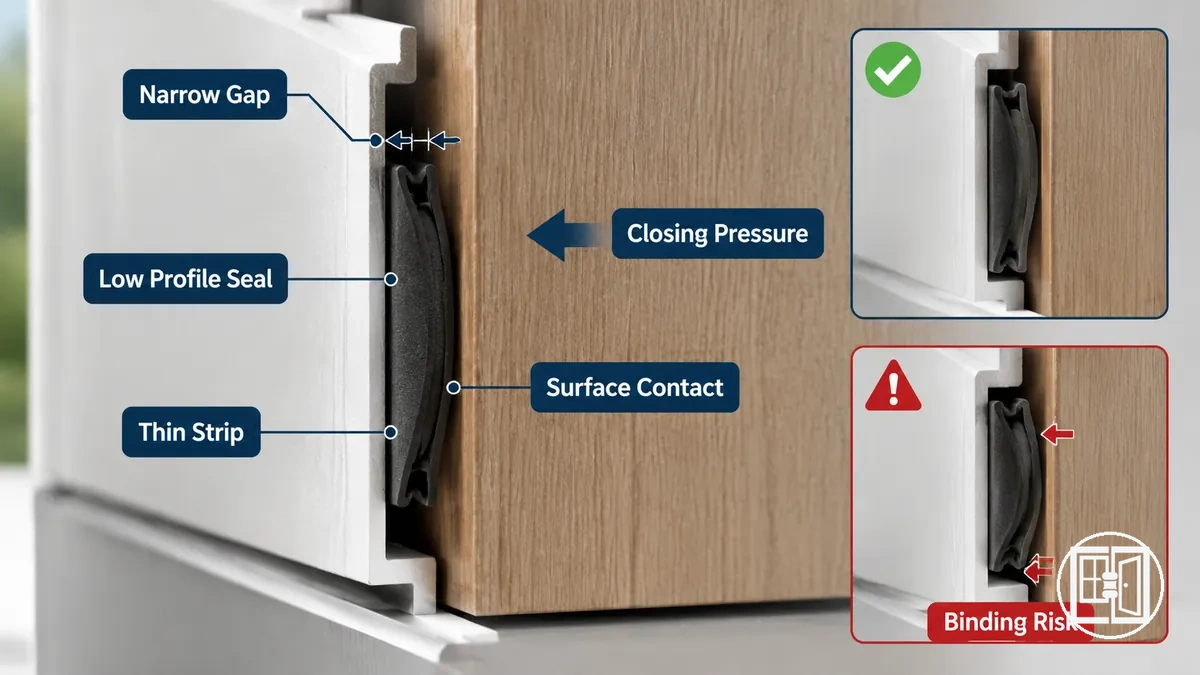
Narrow gaps and low-profile weather stripping can be misjudged when an old flattened seal remains in place, because it reduces visible clearance and distorts the true gap measurement. After removal, the actual surface contact requirement and closing pressure may differ, meaning an oversized strip can still create binding even if the gap initially appears restrictive. In such cases, acceptance or rejection of a thicker profile depends on the corrected clearance rather than the flattened reading.
- Narrow gap: requires low-profile seal with low compression height
- Surface contact: must stay consistent without restricting movement
- Closing pressure: should remain within smooth operation limits to avoid binding
- Oversized strip risk: may interfere even when gap appears visually tight
Wide gaps and extra-thick seal limits
Wide gaps and extra-thick seal limits depend on whether the seal can provide enough compression depth to fill the opening without creating excessive closure pressure. An extra-thick seal may suit a wide gap when rebound, attachment strength, and frame contact stability remain balanced, but performance can vary with frame movement and surface condition. :contentReference[oaicite:0]{index=0}
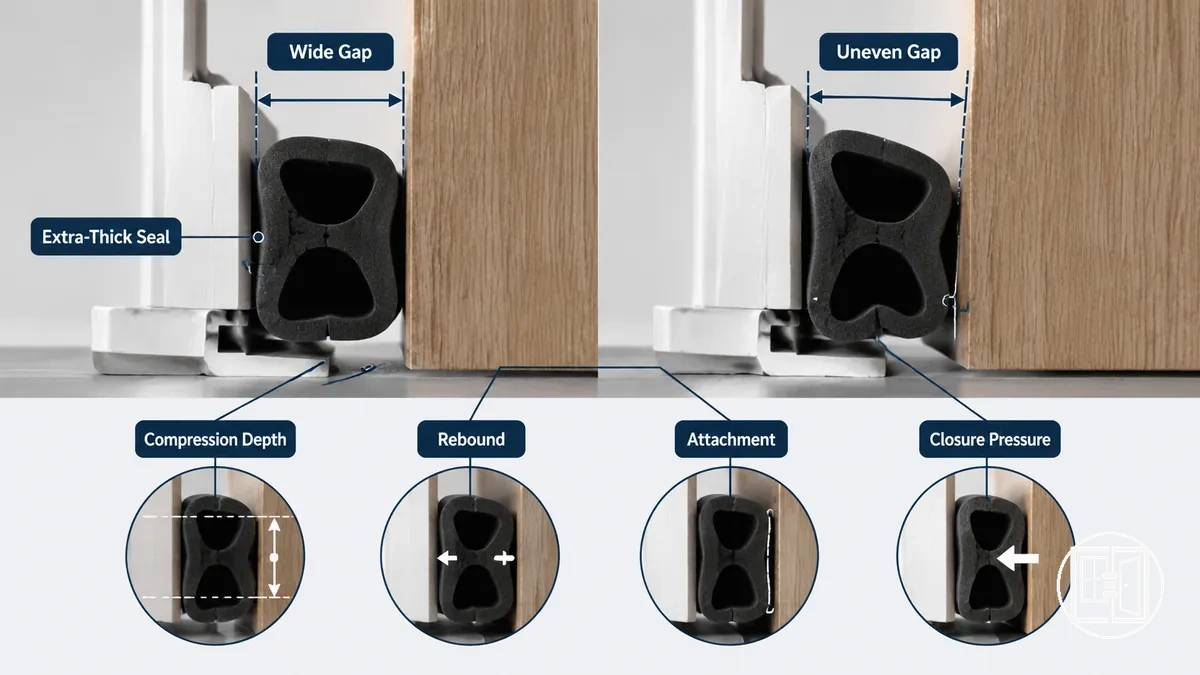
A wide even gap may allow an extra-thick strip to perform more consistently because compression depth is relatively uniform across the frame. A wide uneven gap can change closure pressure and rebound behavior at different points, which may reduce contact stability and increase fit variability, so an adjustable sealing approach may be more suitable in some cases rather than relying on thickness alone.
- Check if compression depth matches the full wide gap without restricting closure.
- Verify rebound behavior to maintain consistent frame contact after closing.
- Assess closure pressure to avoid difficult door or window movement.
- Confirm attachment strength under repeated movement stress.
- Evaluate uneven gap variation before selecting an extra-thick seal.
Frame channels, kerfs, and mounting surfaces
Frame channel, kerf, and mounting surface compatibility depends on whether the frame can support a press-in seal, adhesive seal, or surface-mounted seal so the attachment method can stay seated and aligned under movement. Compatibility is determined first by whether the frame provides a kerf or groove for retention or a flat mounting surface that allows adhesion and surface contact.
| Frame feature | Compatible seal base |
|---|---|
| Kerf / groove | Press-in seal |
| Flat painted surface | Adhesive seal |
| Stop / jamb surface | Surface-mounted seal |
| Threshold area | Surface-mounted or adhesive seal (varies by condition) |
| Unsuitable surface | No stable attachment method |
Frame channels, kerfs, grooves, and mounting surfaces define how a seal base behaves once placed. A kerf or groove can support a press-in seal by providing retention inside a seating channel, while flat surfaces and painted jamb areas align more commonly with adhesive or surface-mounted seals. Stop, sash, jamb, and threshold areas may each affect alignment differently depending on wear, paint buildup, and available contact width, which can increase attachment risk when the surface is inconsistent.
Attachment compatibility and material preference can influence each other, but they remain separate evaluation layers because a suitable mounting surface does not always guarantee stable long-term performance under movement conditions. These differences are further clarified in material fit differences.
Kerf or groove frames for press-in seals
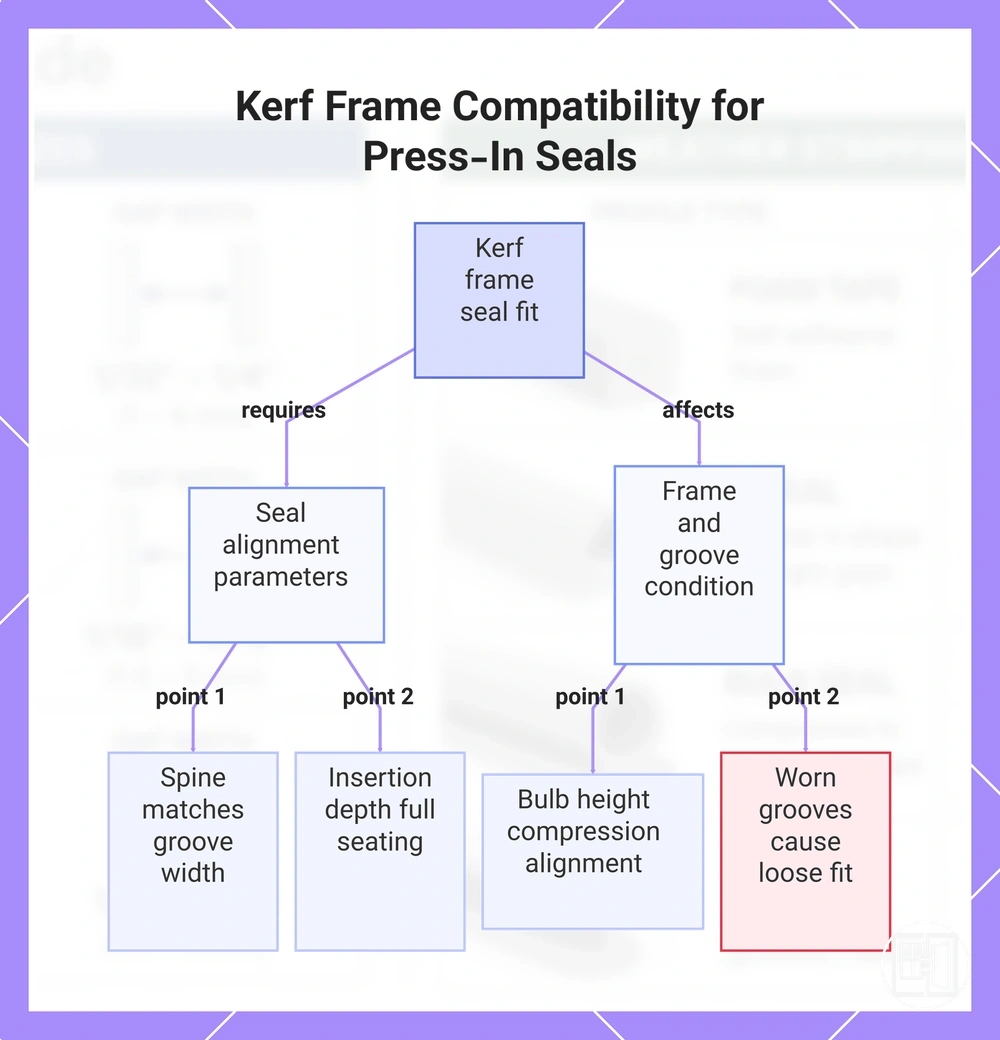
Kerf or groove compatibility depends on matching the press-in seal spine, retention barb, groove width, and insertion depth so the seal can seat securely inside the kerf frame without loosening or misalignment. The seal spine must align with the groove channel, while bulb height and compression face position determine whether the press-in seal maintains stable frame contact rather than relying only on visible profile similarity.
Kerf frames with worn, painted over, or deformed grooves can reduce retention performance because groove width and depth may no longer support stable insertion depth. In these conditions, even when the seal spine and retention barb appear compatible, the press-in seal may sit loosely or unevenly due to reduced groove definition or inconsistent channel shape.
- seal spine must match kerf groove width for secure retention
- insertion depth must allow full seating without partial disengagement
- bulb height must align with compression face for stable frame contact
This chart shows the key compatibility factors and risks for press-in seals in kerf frames, including alignment requirements and groove condition effects.
Flat frame surfaces for adhesive or surface-mounted seals
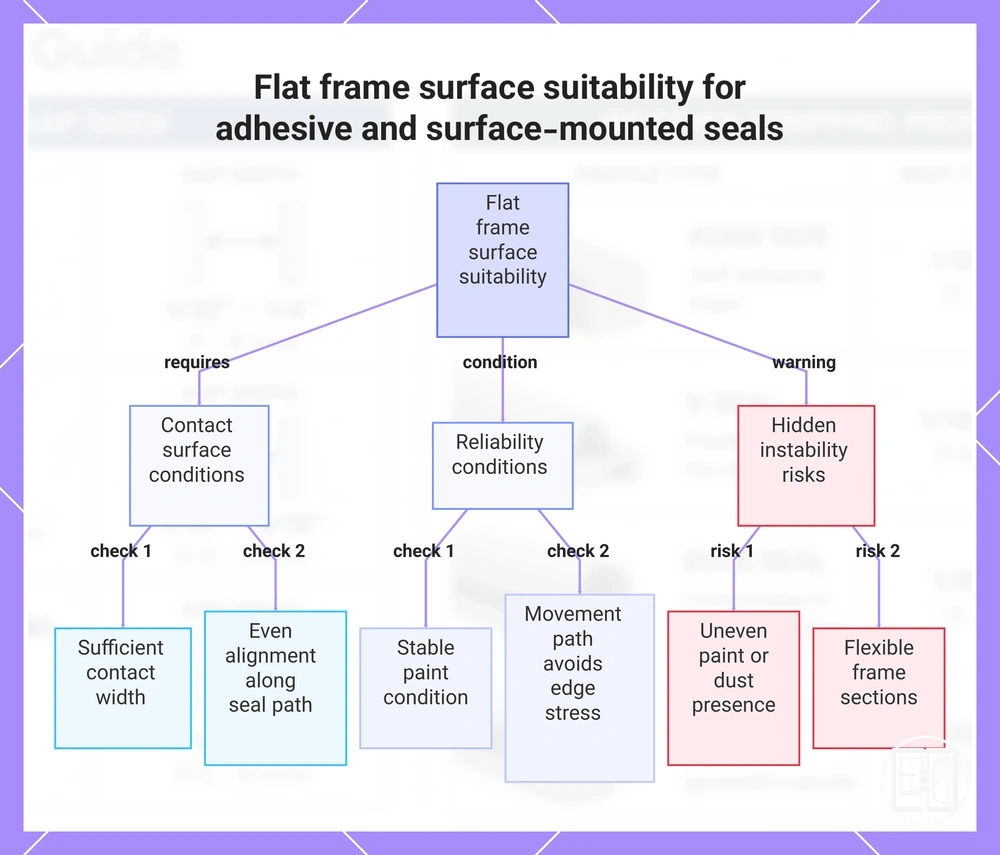
A flat frame surface can support an adhesive seal or a surface-mounted seal when the mounting face provides sufficient width, stable contact line alignment, and consistent attachment reliability under normal movement. The flat frame surface must allow the adhesive seal or surface-mounted seal to sit evenly so the contact line remains aligned during repeated closing cycles.
Attachment reliability depends strongly on surface condition, paint condition, and the movement path of the frame. Even when a flat frame surface appears compatible, uneven paint layers, dust presence, or flexible frame sections can reduce contact stability and increase lift-off risk over time. In these cases, apparent compatibility may not translate into stable performance after use.
Suitability checklist
- Flat frame surface has sufficient clean contact width
- Contact line aligns evenly along the sealing path
- Paint condition is stable without uneven buildup affecting adhesion
- Movement path does not create repeated edge stress or lift-off risk
This chart shows the key requirements, critical conditions, and hidden risks for ensuring a flat frame surface reliably supports an adhesive or surface-mounted seal.
Frame material conditions that change seal compatibility
Frame material conditions change seal compatibility because groove style, surface stability, adhesive behavior, and compression tolerance vary even when gap size appears similar. These factors determine how a seal aligns, holds, and performs across different frame environments.
uPVC, timber, and metal frame conditions create distinct compatibility behaviors. uPVC frames often rely on defined groove style that supports guided sealing, while timber depends more on surface stability and paint condition, which can influence adhesive behavior for surface-mounted seals. Metal frame conditions typically provide higher surface hardness and more consistent contact lines, but corrosion or uneven aging can reduce compression tolerance. Across all frame material types, age and wear may alter groove definition or surface consistency, changing expected fit behavior.
Frame material conditions should be treated as compatibility modifiers rather than fixed rules, because groove design, surface stability, and movement behavior can vary within each material category. This separation helps distinguish compatibility logic from broader evaluation topics such as material fit differences.
| Frame material condition | Compatibility effect | Fit caution | Suitable seal direction |
|---|---|---|---|
| uPVC frame | Groove style supports guided sealing | Wear or shallow grooves may reduce fit precision | Press-in or groove-based seals |
| Painted timber | Surface stability affects adhesive behavior | Paint layers and movement may reduce adhesion consistency | Surface-mounted seals |
| Bare or uneven timber | Variable surface stability and contact alignment | Irregular surface can affect attachment reliability | Surface-mounted seals with caution |
| Metal frame | Stable surface contact with higher compression tolerance | Corrosion or uneven sections may affect alignment | Surface-mounted or groove-based seals |
| Aged frame (any material) | Reduced groove definition or surface consistency | Wear and deformation may alter fit behavior | Condition-based selection required |
uPVC frames and replacement seal fit
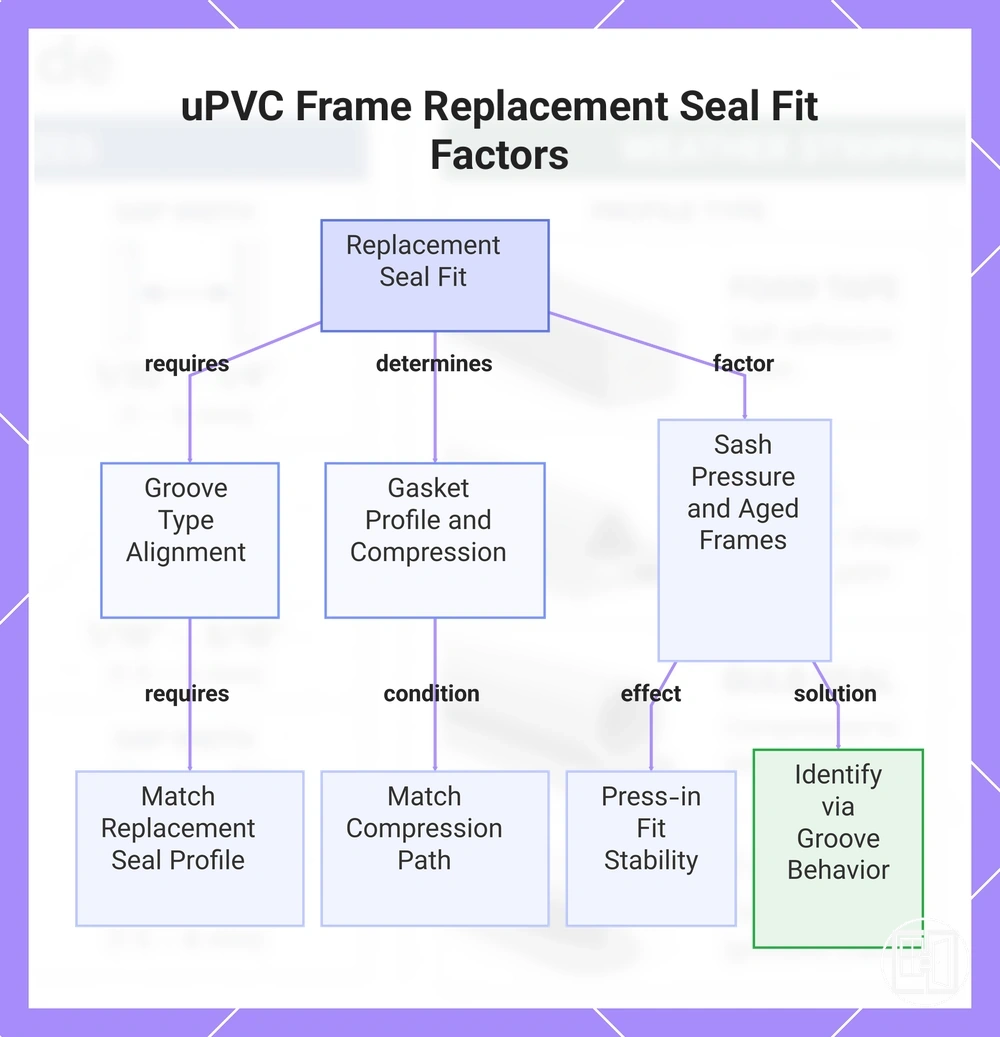
uPVC frame compatibility depends on matching the groove type, gasket profile, and compression path, because replacement seal fit is usually profile-specific rather than based on visual similarity. A correct press-in fit occurs when the replacement seal aligns with the existing groove geometry and responds correctly to sash pressure during closing.
In a uPVC frame, groove type defines how securely the replacement seal seats, while gasket profile determines how the seal compresses along the closing path. Sash pressure influences how tightly the seal is held during operation and whether the press-in fit remains stable or shifts into mismatch risk. Older uPVC frames may also present edge cases where the original gasket shape is flattened or unclear, making identification dependent on groove behavior and compression response rather than appearance.
- groove type must align with replacement seal profile for stable seating
- gasket profile must match compression path under sash pressure
- older gasket shape may be unreliable for direct visual identification
This chart shows the three main conditions that determine correct press-in fit of a replacement seal in a uPVC frame: groove type alignment, gasket profile compression path, and the influence of sash pressure along with handling older frames.
Timber and metal frames with variable sealing surfaces
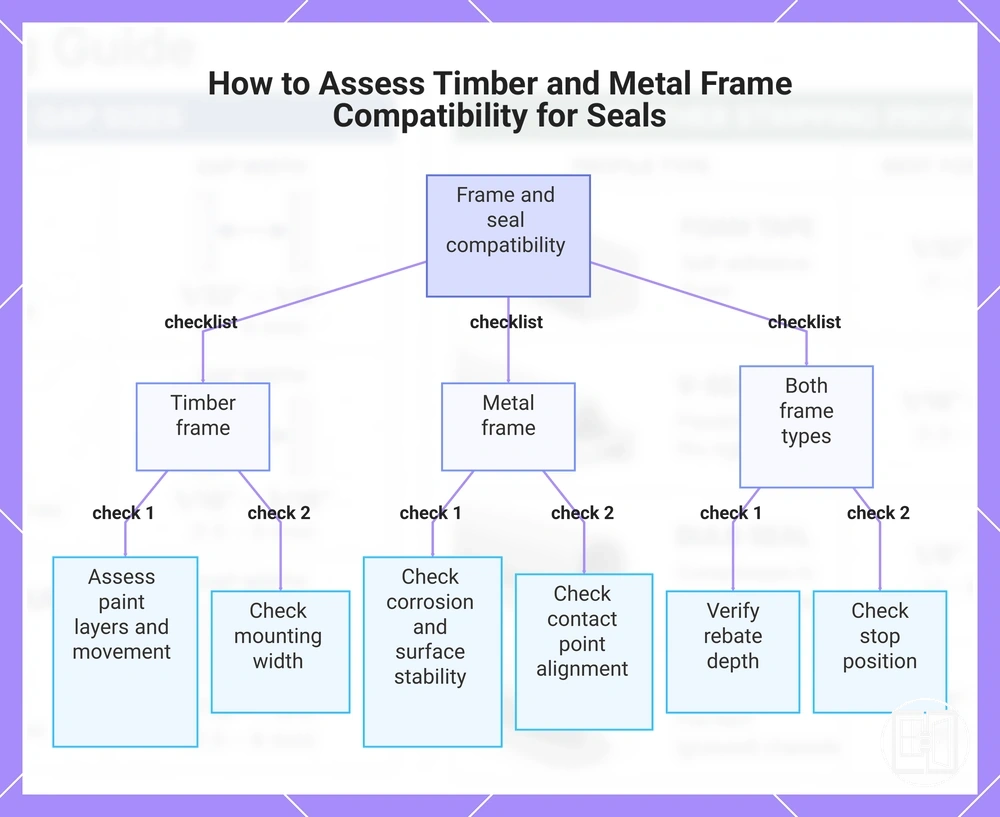
Timber frame and metal frame compatibility depends on surface condition, mounting width, and how the sealing surface aligns with the chosen seal, because paint layers, corrosion, rebate depth, and stop position can alter the effective contact point even when the surface appears flat. Adhesive, compression, or surface-mounted seals may each respond differently depending on these conditions.
In a timber frame, paint layers and natural movement can change surface stability and affect how a surface-mounted seal maintains contact, especially when mounting width is limited or uneven. In a metal frame, corrosion or surface irregularities can shift the contact point, while rebate depth and stop position influence whether a compression fit remains consistent. A visually flat surface may still be unsuitable when the contact point does not align with the seal path, leading to mismatch between frame geometry and sealing line.
- Timber frame: assess paint layers, movement, and mounting width before selecting adhesive or surface-mounted seals
- Metal frame: check corrosion, surface stability, and contact point alignment for compression or surface-mounted fit
- Both frame types: verify rebate depth and stop position to ensure proper sealing alignment
This chart shows the key checks for evaluating timber and metal frame compatibility with adhesive, compression, or surface-mounted seals based on surface condition, mounting width, and sealing alignment.
Seal profile compatibility with frame contact points
Seal profile compatibility with frame contact points depends on whether the seal profile aligns with the correct contact line under compression, because seal shape only matters when it meets the intended contact point on the door, sash, jamb, stop, or threshold. A mismatch between seal profile and contact line can reduce sealing effectiveness even if the material appears suitable.
Seal profile behavior changes based on compression direction and how the profile shape interacts with the frame contact point. The same seal profile may perform differently depending on whether it meets a vertical perimeter contact line or a bottom threshold contact point, since each location changes how pressure is distributed across the sealing edge.
| Seal profile | Contact point | Compression direction | Fit caution |
|---|---|---|---|
| Bulb | Jamb or sash contact line | Multi-directional compression | May reduce efficiency if contact line is uneven or narrow |
| V-Strip | Side frame contact edges | Lateral compression | Requires consistent edge alignment for stable sealing outcome |
| Foam | Flat stop or sealing surface | Vertical compression | May compress unevenly on irregular contact surfaces |
| Fin | Guided frame contact line | Directional flex compression | Depends on stable alignment path for consistent sealing |
| Sweep | Bottom threshold contact | Downward compression | Best suited for threshold clearance rather than perimeter sealing |
| Compression shape | Perimeter contact line | Direct pressure compression | Performance depends on uniform contact distribution |
Vertical perimeter contact and bottom threshold contact differ in how they engage the seal profile. Perimeter sealing relies on lateral or multi-directional compression along the jamb or stop, while threshold sealing depends on downward compression at the base, which changes whether profiles like sweep or bulb are more suitable for maintaining a consistent contact line.
Door bottom, threshold, and adjustable seal compatibility
Door bottom compatibility depends on floor clearance, threshold shape, swing path, and uneven gap conditions rather than treating a standard perimeter seal as sufficient. A door bottom may require a door sweep, adjustable seal, automatic seal, or threshold-compatible strip depending on how the door interacts with the threshold during closing.
Threshold shape and swing path determine how consistently the door bottom reaches the contact point. A door sweep may suit a stable floor clearance where the threshold contact line remains consistent, while an automatic seal or threshold-compatible strip may be needed when contact varies during the swing path or when the threshold geometry changes the compression behavior.
| Bottom-door condition | Seal direction | Compatibility risk | Decision cue |
|---|---|---|---|
| Stable bottom gap | Door sweep | Contact may vary with movement | Check consistent floor clearance |
| Uneven gap | Adjustable seal | Uneven contact across width | Requires compensation across gap |
| Raised threshold | Threshold-compatible strip | Compression mismatch risk | Match threshold contact profile |
| No threshold contact | Automatic seal | Open gap during closure | Engage during closing action |
| Swing clearance issue | Perimeter-only rejection | Interference with movement | Reassess bottom sealing approach |
An uneven floor can create an uneven gap where one side of the door bottom is wider than the other. In this case, adjustability becomes more important than seal type because fixed door sweeps may fail to maintain uniform contact across the full swing path.
Choose between door sweep, adjustable seal, automatic seal, or threshold-compatible strip based on floor clearance, threshold shape, swing path, and whether an uneven gap affects contact consistency. For broader decision context, refer to the selection guide.
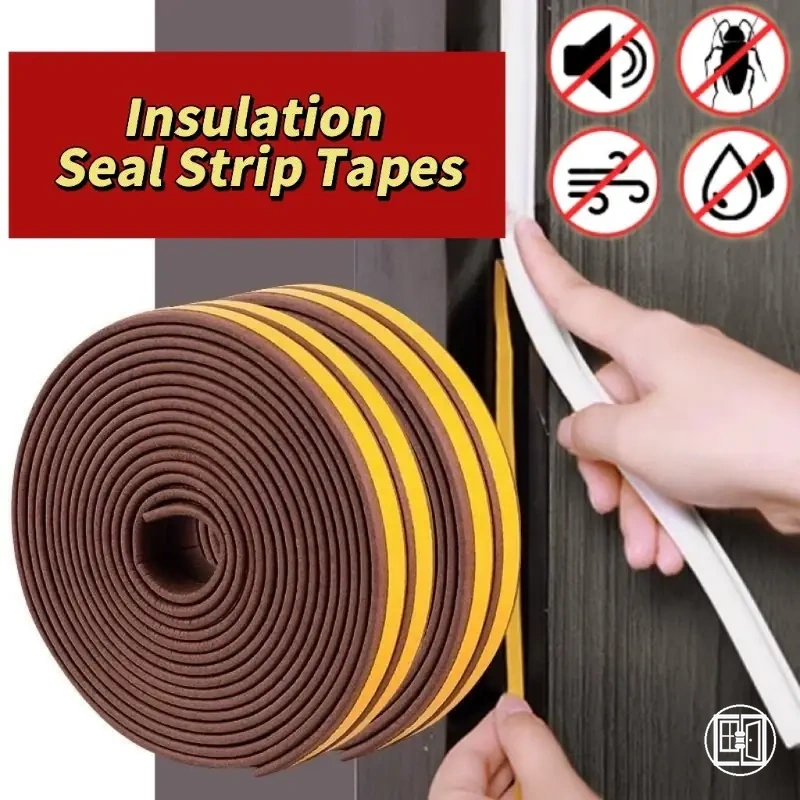
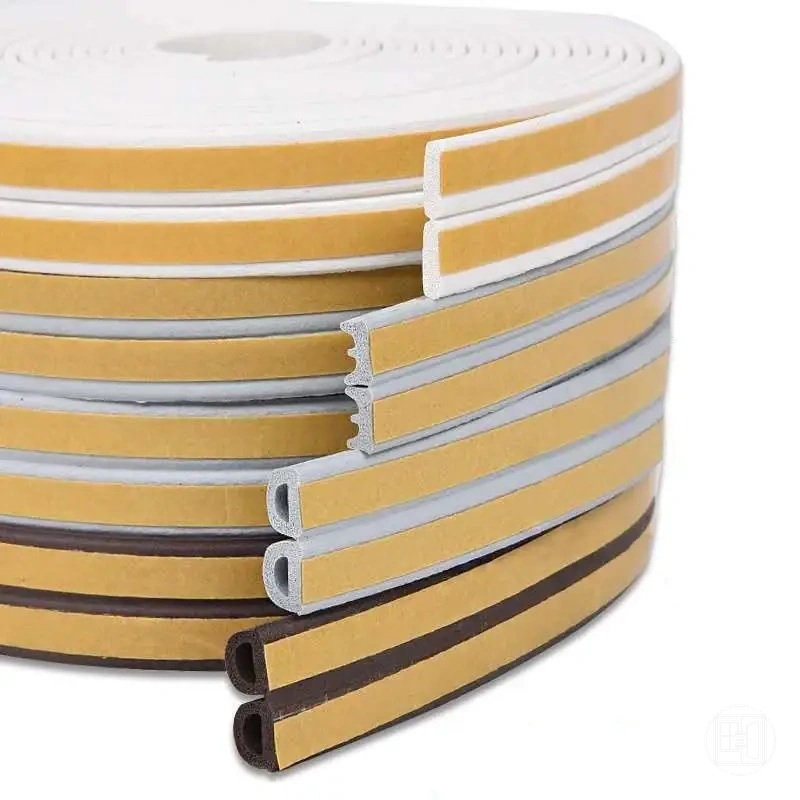
Here are product examples that may make comparison easier. Before buying, always review the compatibility criteria, essential features, and product details.
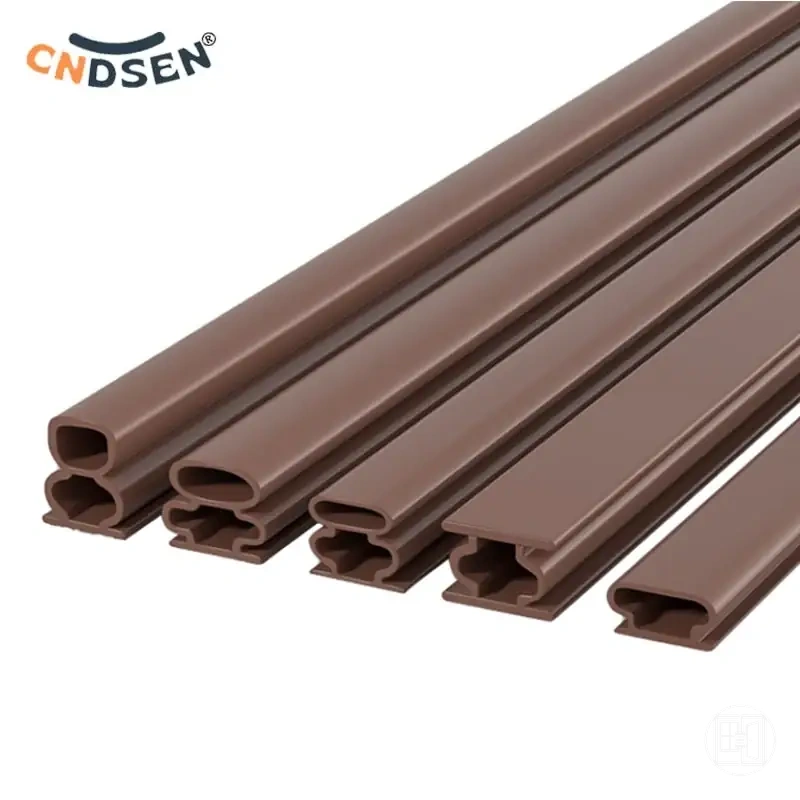
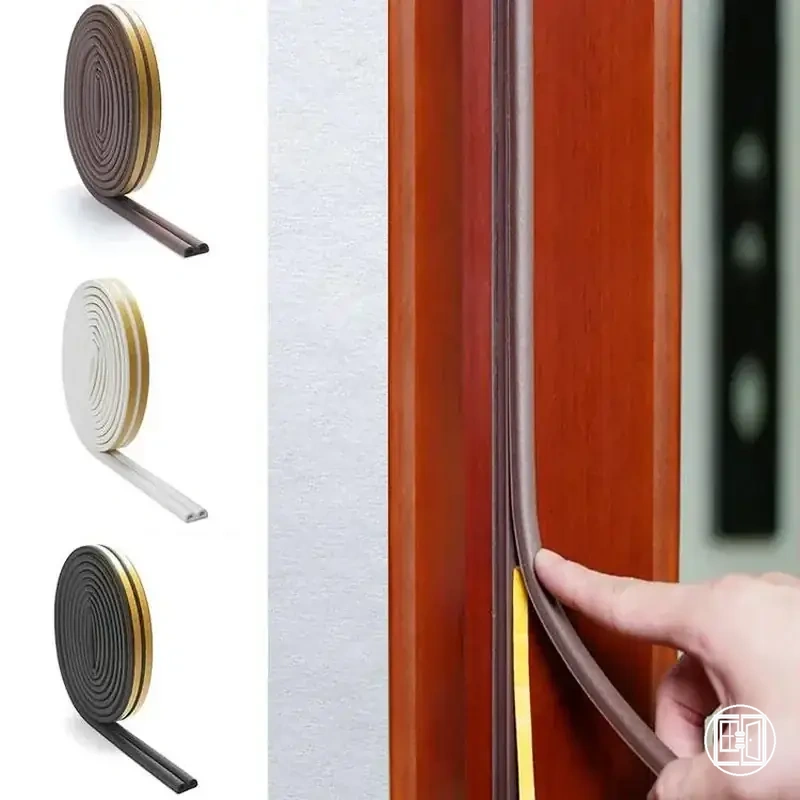
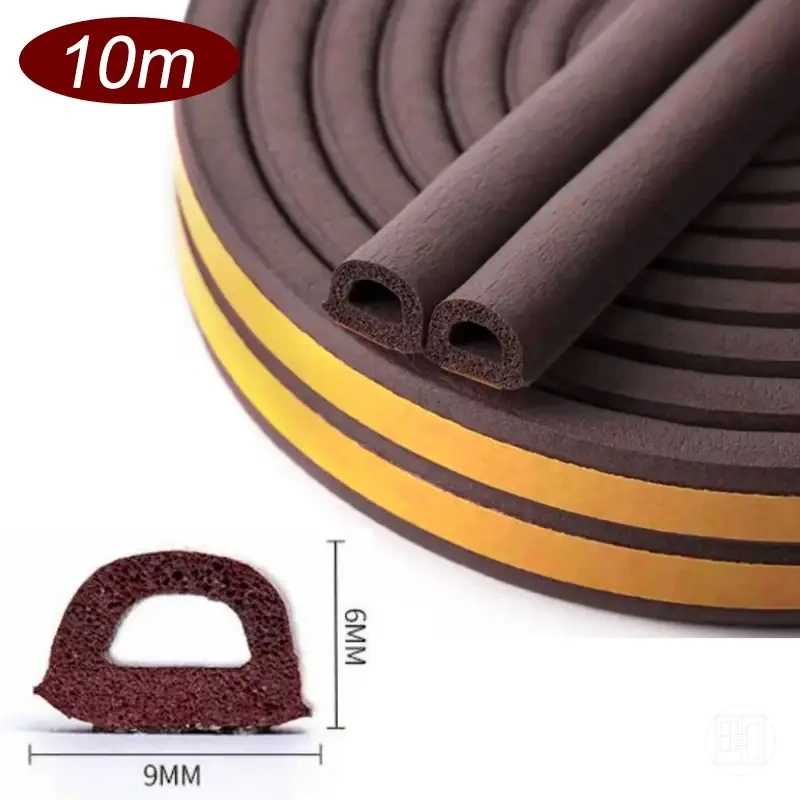
Adjustable and automatic bottom seals for uneven gaps
Adjustable bottom seal and automatic bottom seal systems support uneven gap conditions by allowing controlled variation in sealing height when a fixed strip cannot maintain consistent contact across the door bottom. Adjustability functions as fit control, so performance depends on matching drop range, threshold contact, and swing clearance rather than treating it as a universal improvement.
Threshold shape and door alignment define whether an adjustable bottom seal can operate within its working range. An uneven gap may still require evaluation of swing clearance and contact stability, since an automatic bottom seal can become unsuitable if the threshold geometry or alignment prevents consistent engagement across the full width of the door bottom.
- Uneven gap: suitability depends on whether gap variation stays within adjustable range
- Drop range: must cover the lowest contact point without interfering at higher points
- Threshold contact: requires consistent engagement with threshold shape across movement
- Swing clearance: must remain sufficient to avoid restriction during door operation
Door sweeps and perimeter seals for stable gaps
A stable gap allows a door sweep or perimeter seal to maintain consistent contact because the door bottom, side jamb, and head jamb remain aligned during closing, enabling fixed sealing elements to work under predictable conditions. A stable gap depends on consistent clearance and a uniform contact surface across the sealing line rather than variation during operation.
Door sweeps primarily manage the bottom sweep position where consistent clearance exists, while perimeter seals manage compression along the side jamb and head jamb where perimeter compression remains uniform. These fixed seals rely on stable gap geometry, so performance is linked to consistent contact surface and steady closure rather than adaptive adjustment. In contrast, uneven gaps can reduce effectiveness because contact changes along the sealing line.
- Door sweep: suited for stable bottom clearance with consistent contact surface
- Side jamb: perimeter seal works when vertical compression remains uniform
- Head jamb: fixed strip performs when top alignment stays consistent
Compatibility checks before choosing weather stripping
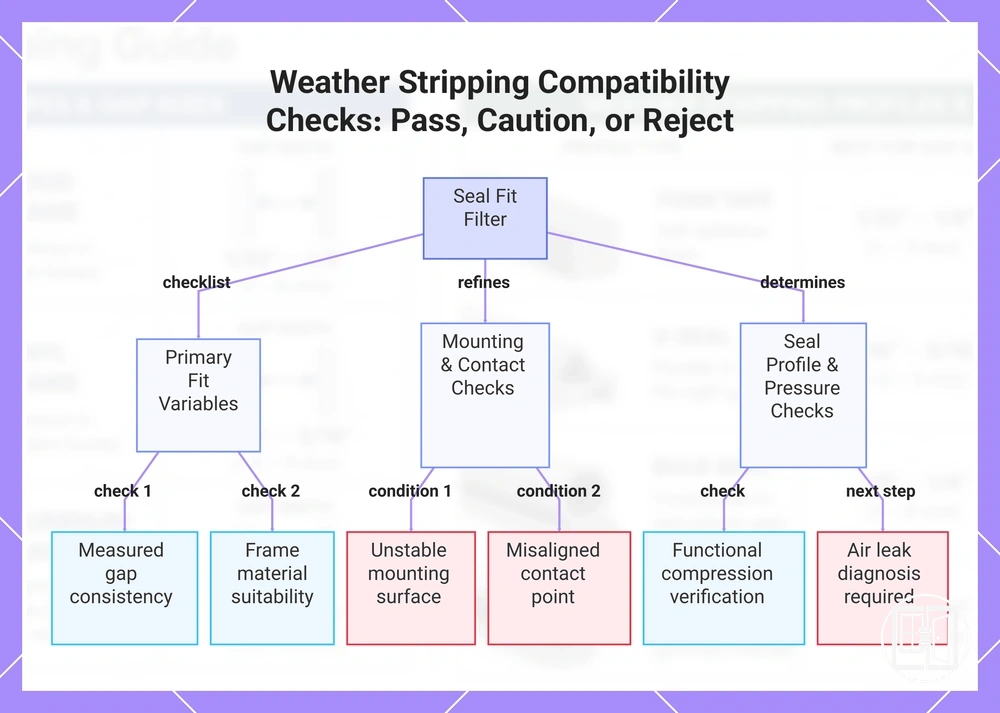
Compatibility checks before choosing weather stripping act as a filter that evaluates whether fit conditions align with frame, gap, contact, compression, and attachment requirements rather than relying on preference alone. These compatibility checks typically lead to a pass, caution, or reject decision based on how well the sealing system matches physical conditions.
Each check starts with the measured gap and frame material because these define the baseline fit conditions for weather stripping selection. Mini-checklist for primary fit variables:
- Measured gap consistency across the full closing path
- Frame material suitability for sealing retention
- Mounting surface stability and usable area
- Contact point alignment along the sealing line
- Seal profile compatibility with frame geometry
- Closure pressure level and distribution pattern
- Clear failure signals indicating reject decision conditions
Mounting surface and contact point checks refine the decision by confirming whether the seal can remain stable during repeated closure cycles. Even when the gap is acceptable, an unstable mounting surface or misaligned contact point may shift the outcome from pass to caution depending on movement and wear conditions.
Seal profile and closure pressure determine whether the selected weather stripping maintains functional compression across the entire contact line, since uneven pressure distribution can reduce sealing consistency. These criteria are often evaluated alongside the selection guide to refine the final fit decision.
If compatibility checks reveal inconsistent sealing behavior or unresolved leakage patterns, further diagnosis of air leak issues is required before final selection.
Here are product examples that may make comparison easier. Before buying, always review the compatibility criteria, essential features, and product details.
This chart shows the compatibility checks for weather stripping that evaluate fit conditions and result in pass, caution, or reject decisions.
Compatibility mistakes that cause poor sealing
Compatibility mistakes that cause poor sealing occur when weather stripping does not match the measured gap, frame material, contact point, or attachment method, leading to draft, binding, or loose seal behaviour. In many cases, compatibility mistakes are the main reason for poor sealing rather than the sealing material itself.
Most compatibility mistakes can be grouped into a few recurring fit and installation mismatches that affect sealing performance:
| Mistake | Symptom | Likely compatibility issue | Correction direction |
|---|---|---|---|
| Wrong thickness | Binding or hard closure | Measured gap mismatch | Recheck gap sizing before selection |
| Wrong profile | Draft or uneven sealing line | Contact point misalignment | Match profile to frame geometry |
| Wrong mounting method | Loose seal or detachment | Frame surface incompatibility | Align attachment method with frame type |
| Dirty or uneven surface | Intermittent sealing failure | Poor mounting surface condition | Stabilize and clean contact surface |
| Ignored threshold shape | Gap at bottom edge | Threshold mismatch | Account for threshold geometry |
| Uneven gap | Partial sealing or leakage | Variable compression zone | Adjust selection to gap variation |
These compatibility mistakes typically interact, meaning a single mismatch in thickness, profile, or mounting method can create multiple symptoms such as draft, binding, or loose seal. Correcting the fit requires aligning all key variables rather than changing only the material.
If poor sealing continues after correcting compatibility factors, the issue may extend beyond fit and require separate assessment of air leak issues.